
Categories
Top Posts

GST Return Filing

Legal Services

Taxpayers

GST Return Filing

Legal Services

Legal Services

GST Registration

Taxpayers

Legal Services

Legal Services
Taxpayers

Legal Services
Taxpayers

Legal Services
GST Registration

Taxpayers

Legal Services

Legal Services

Legal Services

Legal Services

Legal Services

EPR Management

EPR Management

Legal Services

Legal Services

Taxpayers

Social Audit

Taxpayers

GST Return Filing

Legal Services

Legal Services

Legal Services

GST Return Filing

GST Registration

Legal Services
Section 194C of Income Tax Act: TDS on Contracts Simplified
Posted: one year ago
When it comes to income tax compliance in India, Section 194C of the Income Tax Act plays a vital role for businesses and professionals. This section deals specifically with the Tax Deducted at Source (TDS) on payments made to contractors and sub-contractors. For anyone dealing with service agreements or job contracts, understanding Section 194C is crucial. This blog simplifies the key provisions of Section 194C and explains who should deduct TDS, when, and at what rate.
What is Section 194C?
Section 194C mandates that any specified person making a payment to a resident contractor for carrying out any work, including the supply of labor, must deduct TDS at the time of credit or payment, whichever is earlier.
The term “work” includes:
-
Advertising
-
Broadcasting and telecasting
-
Carriage of goods or passengers by any mode (excluding railways)
-
Catering
-
Manufacturing or supplying a product using material purchased by the payer
Who Has to Deduct TDS Under Section 194C?
The responsibility of deducting TDS under this section lies with the following specified persons:
-
Central or State Government
-
Local authorities
-
Corporations established under Central, State, or Provincial Act
-
Companies
-
Cooperative societies
-
Trusts
-
Individuals or Hindu Undivided Families (HUFs) whose turnover exceeds:
-
₹1 crore in the case of business
-
₹50 lakh in case of a profession (in the preceding financial year)
-
This means that not every individual is required to deduct TDS—only those whose turnover exceeds the prescribed limits.
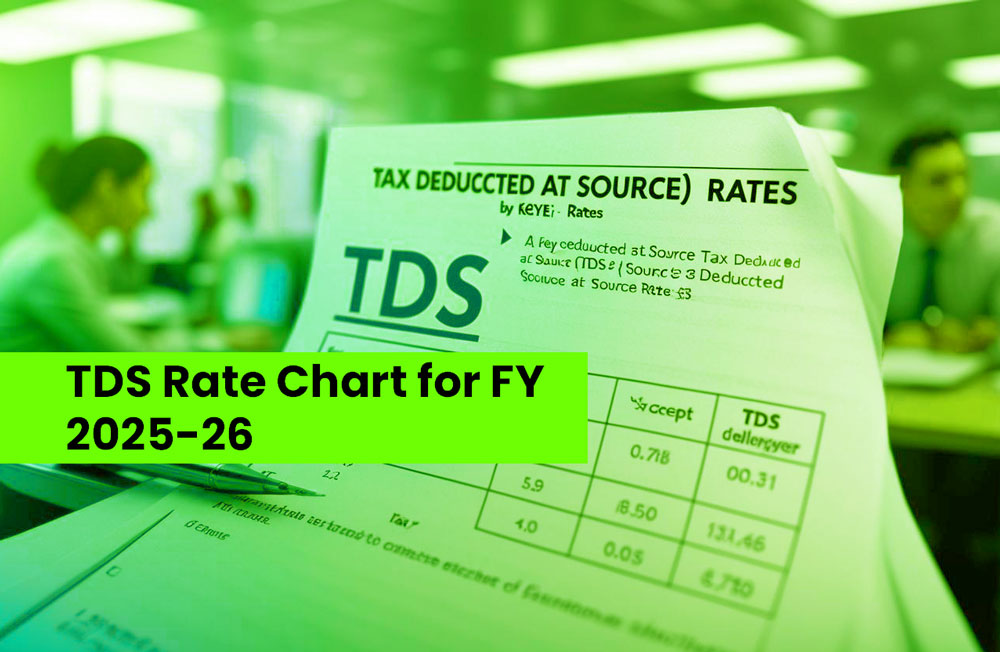
TDS Rates Under Section 194C
The rate of deduction depends on the type of payee:
| Payee | TDS Rate |
|---|---|
| Individual / HUF | 1% |
| Others (Company, Firm, etc.) | 2% |
Note: If the contractor does not furnish a valid PAN, TDS must be deducted at 20% under Section 206AA.
Threshold Limit for TDS Deduction
To reduce the compliance burden, Section 194C has specified threshold limits:
-
Single Contract: No TDS if the amount paid does not exceed ₹30,000.
-
Aggregate in a Financial Year: TDS is applicable if total payments exceed ₹1,00,000 in a financial year, even if no single contract crosses ₹30,000.
So, if you pay a contractor ₹25,000 each for 5 jobs in a year (₹1,25,000 total), you must deduct TDS after the cumulative total exceeds ₹1 lakh.
Time of TDS Deduction and Deposit
TDS should be deducted:
-
At the time of credit to the contractor’s account, or
-
At the time of payment, whichever is earlier.
Deposit Deadlines:
-
For government deductors: Same day without challan
-
For others:
-
By 7th of the following month (except for March, where due date is 30th April)
-
TDS Return Filing
The deductor must file TDS returns in Form 26Q for non-salary payments. It should include PAN details of both payer and payee, contract details, and TDS deducted and deposited.
