
Categories
Top Posts

GST Return Filing

Legal Services
Taxpayers

GST Return Filing
Legal Services

Legal Services

GST Registration
Taxpayers

Legal Services

Legal Services
Taxpayers

Legal Services
Taxpayers

Legal Services
GST Registration

Taxpayers

Legal Services

Legal Services

Legal Services

Legal Services

Legal Services
EPR Management

EPR Management

Legal Services

Legal Services
Taxpayers
Social Audit
Taxpayers

GST Return Filing
Legal Services
Legal Services

Legal Services

GST Return Filing

GST Registration

Legal Services
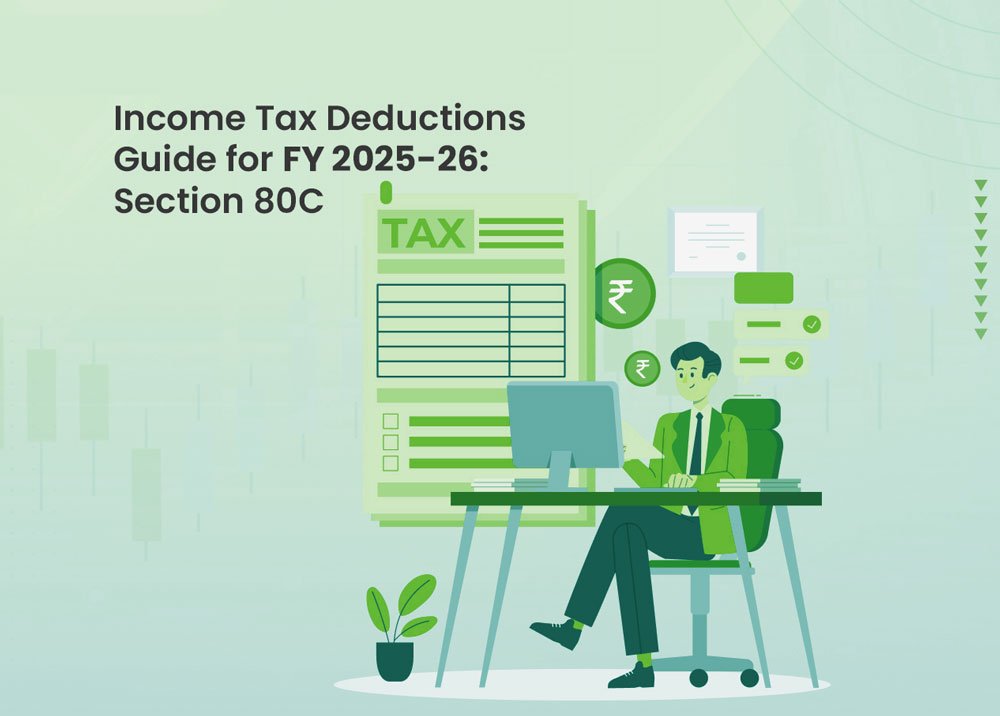
Income Tax Deductions Guide for FY 2025-26
Posted: one year ago
Section 80C & More Explained
As the new financial year 2025–26 begins, taxpayers across India are once again looking for smart ways to save on income tax. The Income Tax Act, 1961 offers several deductions that can help reduce your taxable income—if you plan wisely. Among these, Section 80C remains the most popular, but it’s not the only one. In this blog, we’ll explain Section 80C and other key deductions that every salaried or self-employed individual should know.
🔍 Understanding the Two Tax Regimes
Before we dive into deductions, it’s important to understand that from FY 2023-24 onwards, India has two tax regimes:
-
Old Tax Regime – Allows most deductions (like 80C, 80D, HRA, etc.)
-
New Tax Regime (default from FY 2023-24) – Lower tax slabs but limited deductions
💡 You can switch between regimes each year if you’re a salaried individual. Choose the one that saves you more tax.
✅ Section 80C – Up to ₹1.5 Lakh Deduction
Section 80C is the most widely used deduction, allowing you to claim up to ₹1,50,000 in a financial year.
Eligible Investments/Expenses under 80C:
-
Employee Provident Fund (EPF)
-
Public Provident Fund (PPF)
-
Life Insurance Premium
-
ELSS Mutual Funds (Tax-saving funds)
-
5-Year Fixed Deposit with banks
-
National Savings Certificate (NSC)
-
Sukanya Samriddhi Yojana
-
Principal repayment of home loan
-
Tuition fees for children (up to 2 children)
By investing smartly under Section 80C, you can save up to ₹46,800 in taxes (if you're in the 30% tax slab).
✅ Section 80CCD(1B) – NPS Extra Deduction of ₹50,000
In addition to Section 80C, you can claim an extra deduction of ₹50,000 under Section 80CCD(1B) for investments in the National Pension System (NPS).
This brings your total deduction potential to ₹2 lakh per year (₹1.5 lakh under 80C + ₹50,000 under 80CCD(1B)).
✅ Section 80D – Medical Insurance
This section allows you to save tax on health insurance premiums:
| Beneficiary | Deduction Limit |
|---|---|
| Self, Spouse & Children | ₹25,000 |
| Parents (Age < 60) | ₹25,000 |
| Parents (Age 60+) | ₹50,000 |
So, if you’re covering senior citizen parents, you can claim up to ₹75,000 in total.
✅ Section 24(b) – Home Loan Interest (Old Regime)
You can claim up to ₹2 lakh deduction on interest paid on home loan for self-occupied property. This is applicable only under the old regime.
✅ Section 80E – Education Loan Interest
If you’ve taken a loan for higher education (for self or children), you can claim unlimited deduction on interest paid for up to 8 years under Section 80E.
✅ Section 80G – Donations
Donations made to certain charitable institutions or relief funds are eligible for deduction under Section 80G. The deduction may be 50% or 100%, with or without restriction, depending on the institution.
✅ Section 80TTA & 80TTB – Interest on Savings
-
80TTA: Up to ₹10,000 on savings account interest (for individuals below 60)
-
80TTB: Up to ₹50,000 for senior citizens (includes FD and RD interest)
✅ Which Regime Should You Choose?
If your deductions exceed ₹3–4 lakh (from 80C, 80D, 24(b), etc.), the old regime is usually better. But if your deductions are low, the new regime with lower tax slabs may save you more.
